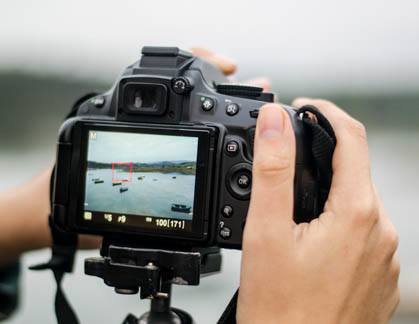
Digital Photography: Technology is Changing the Field
How is Digital Photography Changing the Industry?
Digital photography is nothing if not convenient. You can take pictures, preview them instantly, delete the bad ones and print only the good ones. There is an element of instant gratification that makes digital photography attractive to both amateur and professional photographers alike. You can quickly see problems and make adjustments that will improve the quality of your end result, and you won't end up with a stack of blurry or unflattering prints. For most amateur photographers and hobbyists, digital photography provides everything they need.
Digital photography is becoming more accessible to the general public as digital technology improves and the cost goes down. The Consumer Electronics Association (CEA) recently reported that 77 percent of American households now have one or more digital cameras.
Clearly, the demand for digital photography school and digital technology is on the rise, but is it replacing traditional film? And does the increased quality of amateur photography pose a threat to professional photographers?
Digital Photography vs. Film?
Digital photography or film? It doesn't have to be one or the other. Digital photography and traditional film photography can coexist and even complement each other. Each has its own set of strengths and weaknesses. Digital photography training may change the way many people take pictures but that doesn't make film obsolete.
Professional photographers can often get better results with traditional film. Especially when shooting landscapes or producing larger size prints. Professional photographers have finesse with film—from shooting to developing—that allows them to produce high-quality images.
How Does the Rise of Digital Photography Affect Professionals?
Digital photography technology is convenient in many ways. It allows photographers to get images to clients more quickly. It also allows them to see whether they got the shot right away. Digital technology gives more immediate results—at least in theory. The workflow changes with digital photography. The post-production process may be longer and more expensive in terms of equipment. Digital photography technology also requires photographers to stay current in their knowledge of tools and software.
While the U.S. Bureau of Labor Statistics predicts that job growth in the photography field will be somewhat constrained due to the increased use of digital photography technology among the general public, it's important to note that they are still anticipating the overall number of jobs in the field to grow. After all, good photography requires much more than good equipment.
Digital photography school can be a benefit to your photography career. However, whether professional photographers choose to use digital photography or film, the camera only plays a role in the success of the work. The photographer controls the lighting, creates the composition and imbues the subject with meaning. There will always be a need for professional photographers with technical knowledge and a strong sense of artistry.
Photography Resources
Photography Job Description
Reasons to Attend Photography Schools
Choosing a Photography Degree
Photography Courses: What You'll Study
Should You Go to an Online Photography School?
How Far Should You Take Your Education for Photography?
Photography Portfolio Tips
Photographer Interview
Photography School Spotlight
Industry Information
Outlook for Photography Jobs
Professional Photography Salaries
Five Photography Careers that Pay the Bills
Starting Your Photography Business
Photography Training Specialties
Digital Photography
Helpful Links for a Photography Career